



A Carbon Free City is Being Built from Scratch in Colorado
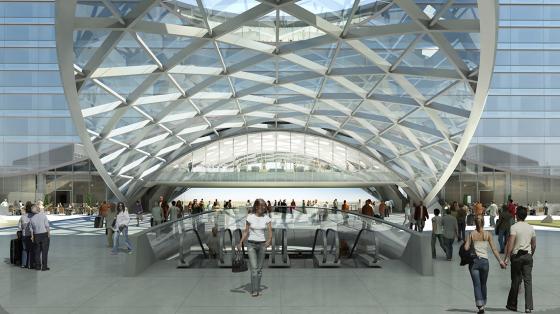

Colorado is planning to build a carbon-free city from scratch. The project called Peña Station Next in Colorado will rely on solar energy, a massive lithium-ion battery, and energy efficiency schemes. The city is an experiment by Panasonic with the support of Denver and Denver county to promote zero carbon cities. The city will be built on a 400-acre plot of mostly vacant land just south of Denver’s International Airport. The inspiration for this project came from a much smaller scale city in Fujisawa, a suburb of Tokyo. That smart town, which cut its CO2 emissions by 70 percent, was finalized three years ago, and property values there have risen by 25 percent since.
So, Panasonic started to think bigger. After getting proposals from 20 U.S. cities, Denver was selected for a project 10 times larger than Fujisawa. The National Renewable Energy Laboratory, part of the Department of Energy located nearby in Golden, Colorado agreed to serve as a consultant. Other companies became interested in the project as well such as Xcel and NREL, leading to ideas about other low carbon energy systems such as the conversion of methane gas into usable energy, even a look at designing a regenerative braking system to extract electricity from the airport trains that stop at Peña Station Next every 15 minutes.
Rumor has it that Peña Station Next will boast some seriously cool gadgets. These are to include transparent tv screens that basically turn any transparent surface into a tv. There will also be smart kitchens. Stovetops aren’t smart enough to cook by themselves, but the range hood has built-in cameras and sensors that “watch” the food cooking and adjust the temperature accordingly. It can also keep a record of dietary habits, even promoting a healthier life-style. The tables would be smart too, being capable of charging phones and themselves. Appearing like wood, they will have a thin monitor just below the surface. The tables would also keep food warm for using induction technology. There is talk of self-driving cars and smart street poles, that monitor the air quality developed by the Argonne National Laboratory, called “the Fitbit for cities”. While the technologies are great, at the end of the day this project is about inspiring with a sustainable business model. Estimates indicate that the city will be built by mid-2018.
To read more:
https://www.denverpost.com/2017/01/22/denvers-panasonic-smart-city/
http://bit.ly/2C14YV0
http://www.penastationnext.com/about/
Replies: 0