



If Green Roofs Cover 30% and Cool Roofs Cover 60% of the Building Roofs, 0.8 GT of CO2 Emissions Will be Reduced and $3 Trillions Will Be Saved
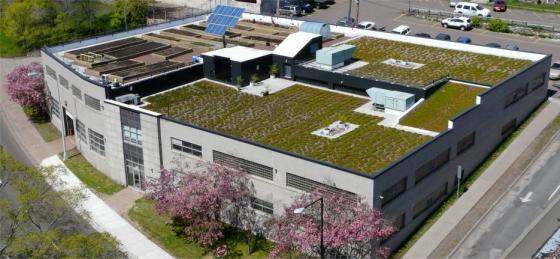

The usual rooftop is plain terrain, exposing to sun, wind, rain, and snow, and enduring extreme temperatures up to 90 Fahrenheit higher than the surrounding air on a hot day. Green roofs, on the contrary, are veritable ecosystems, or sky garden. Green roofs may support a simple carpet of self-sufficient groundcovers such as sedum or full-fledged gardens, parks, or farms. The soil and vegetation work as green heat-insulation, mediating building temperatures all year round: cooler in summer, warmer in winter. Because the electricity needed for heater and air-conditioner is reduced, greenhouse gas emissions and costs are curbed. Cool roofs end with similar results in different ways. When solar energy hits a conventional roof on a 99 Fahrenheit summertime, only 5 percent of the solar energy is reflected back into the sky. The rest remains heating the building. A cool roof, in contrast, can reflect up to 80 percent of the solar energy back into space, reducing the heat taken on by buildings and the overall heat absorbed by the cities (Drawdown). According to Drawdown, which is a project connecting researchers, scientists, and graduate students to present climate solutions, the global green roofs and cool roofs market was 42.5 billion square meters in 2014. This number will double to 85.7 billion by 2050. If green roofs cover 30 percent of roof space by 2050 and cool roofs cover 60 percent of the building roofs, 407 billion square feet of efficient roofing would be built globally. The efficient roofs could reduce carbon dioxide emissions by 800 megatons at a cost of $1.4 trillion, thirty-year savings of $988 billion, and lifetime savings of $3 trillion (Drawdown). Green builders, take some actions! To read more, please visit: https://www.drawdown.org/solutions/buildings-and-cities/green-roofs
Replies: 0