



Study: Renters Expect a Green Living Environment and They Are Willing to Pay Extra For It
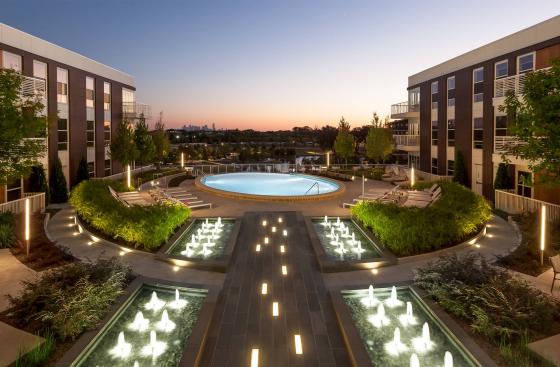

Nowadays, renters are expecting sustainable features such as energy efficiency and good indoor air quality in their apartments. It is a trend that is supported by the government. The entire multifamily financing offered by Fannie Mae, which is a United States government-sponsored enterprise and the Federal National Mortgage Association, is comprised of 42 percent of green incentive program in 2017. The green program, which financed $27.6 billion in multifamily loans last year, offered lower interest rates to apartment properties that have earned green building certifications or agree to reduce their energy usage or water by 25 percent. Renters' value of green design is strong enough to translate into a higher rent. According to 2017 Kingsley Apartment Renter Preference Report published by the National Multifamily Housing Council, tenants are willing to pay $326.52 extra per year to reside in buildings that have green certifications such as LEED and Energy Star. The report is based on 269,000 renters regarding which factors influence their choices on where they would like to live. The vast majority of renters (61 percent) reported that they were interested or very interested in living in apartments that have an energy efficiency or sustainable design certification. Whenever there is a demand, there will be a market. To read more, please visit: National Real Estate Investor http://www.nreionline.com/multifamily/apartment-renters-now-expect-sustainable-design-features-their-units http://www.nreionline.com/multifamily/value-add-multifamily-investors-benefit-gse-green-financing NMHC report https://www.nmhc.org/research-insight/research-report/2017-nmhc-kingsley-apartment-renter-preferences-report/ Weerasinghe, Ramachandra and Thurairajah http://www.arcom.ac.uk/-docs/proceedings/9e3d4fff94acbb59642417394d770de5.pdf Kats, G (2006) Greening America’s Schools: Costs and Benefits. A capital E Report. U.S. Green Building Council. Available from http://www.usgbc.org/Docs/Archive/General/Docs2908.pdf [Accessed 26th May 2016]. Kats, G, James, M, Apfelbaum, S, Darden, T, Farr, D and Fox, R (2008) Greening buildings and communities: costs and benefits. A Capital E Report. Westborough, MA: U.S. Green Building Council. Cole, R J (2000) Editorial: Cost and value in building green. Building Research & Information, 28(5-6), 304-309. Kansal, R and Kadambari, G (2010) Green buildings: An assessment of life cycle cost. The IUP Journal of Infrastructure, 8, 50-57.
Replies: 0