



An Alternative to Plastic Food Packaging: Laser Marks on Food Items
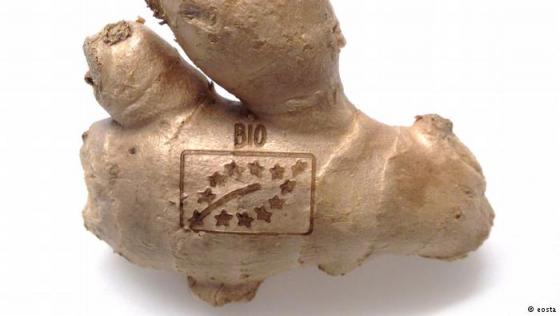

Ironically, organic fruits and vegetables are often packaged and labeled with plastic. The packaging plastics are usually unrecyclable and become plastic waste. Plastic waste is a huge worldwide issue. Globally, 18 billion pounds of plastic waste flows into the oceans from coastal regions every year and 40% of them come from packaging (National Geography). In Germany, people throw away 18.2 million tons of packaging plastics every year, according to the German Federal Environmental Agency. In the United States, shoppers use approximately 365 plastics bags and only recycle 9 percent of the plastic wastes are recycled (National Geography). If we do nothing, our ocean will be filled with more plastic than fish by 2050 (Roland Geyer et al).
A Trucost study "A Valuation of Environmental Benefits, Costs, and Opportunities for Continuous Improvement" found that the environmental cost of using plastics in consumer goods and packaging would be nearly four times less than using alternative materials. We need to replace the plastic packaging with a feasible alternative. Plastic stickers on organic tomatoes or plastic wrappings on cucumbers need to go away.
A Netherland packing and distributing company called Eosta introduces a practical solution to sustainable packaging to the European market. Eosta "engraves" its organic fruit and vegetable labels directly with laser technology. Its market experiment started in 2016, replacing millions of pieces of plastic packages of organic fruits and vegetables in the Swedish supermarket ICA.
The laser mark has no negative effect on the look, taste or durability of the product, according to Eosta. The technology is particularly suitable for fruit and vegetables with a hard shell, such as kiwis, avocados, and cucumbers. However, there is a drawback of the laser encode: On tiny foods like grapes and cherry, the technology is inapplicable. In addition, on citrus fruits such as lemons and oranges, which can quickly replace pigments in their peels and make the logo invisible, the laser mark will not work.
What about the price? Consumers can be price-sensitive, even among an eco-friendly crowd. Does the laser mark increase the price of products compared to conventional plastic packaging? According to Rolf Buschmann, a packaging expert with BUND, which is a German non-governmental organization dedicated to preserving nature and protecting the environment, production costs of laser mark will not increase compared to the production costs of sticky labels or plastic packaging, so prices will remain unchanged.
We need this laser mark on our food in the US.
To read more, please visit:
DW
https://www.dw.com/en/finally-an-alternative-to-plastic-for-labeling-organics/a-44084391
Helpguide
https://www.helpguide.org/articles/healthy-eating/organic-foods.htm
Roland Geyer, Jenna R. Jambeck, and Kara Lavender Law
http://advances.sciencemag.org/content/3/7/e1700782.full
Laura Parker
National Geography
https://news.nationalgeographic.com/2018/05/plastics-facts-infographics-ocean-pollution/
Trucost study
https://plastics.americanchemistry.com/Study-from-Trucost-Finds-Plastics-Reduce-Environmental-Costs/
Replies: 0