



The World’s Most Sustainable Office of 2018
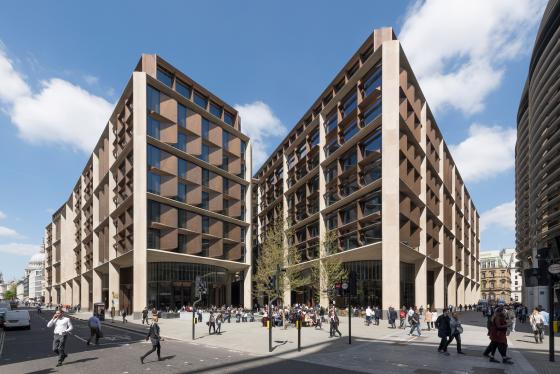

The Royal Institute of British Architects awarded the 2018 RIBA Stirling Prize to Bloomberg, London by Foster + Partners. The RIBA Stirling Prize is judged against a range of criteria including design vision; innovation and originality; capacity to stimulate, engage and delight occupants and visitors; accessibility and sustainability; how to fit the building is for its purpose and the level of client satisfaction.
“Bloomberg is a unique project that has surpassed the limits of research and innovation in architecture,” said Sir David Adjaye, chairman of 2018 jury.
The entire building was, both internally and externally, constructed with high quality. Externally the building connects with the old buildings around, being an extension of the public space. Through the site runs a pedestrian path, re-opening the route of a Roman road. Composed of two triangles block, each one with nine floors and connected by bridges that extend over an avenue for pedestrians. The project purpose was to avoid a traditional office space, therefore, the Foster+Partners designed a dynamic interior. The hall level is very vibrant and full of activities. This is where the true success of the project begins to emerge. Wherever you look, there is an inventive detail.
“From our first discussions to the final details of the project, Mike Bloomberg and I had a ‘meeting of minds’ on every aspect of the project – its sustainable focus, commitment to innovation and drive to create the best workplace for Bloomberg employees,” said Norman Foster.
While the building is a complement of the urban landscape of London, the sustainability goes around the entire building. The Bloomberg HQ save 73 percent of water consumption and 35 percent of energy consume more than the typical office buildings. The sustainable strategies used for this successful building was:
- The Ventilation strategy – the concrete supporting structure with a series of bronze fins guarantee the shading of the large glass cloths that go from floor to ceiling. The fins can be opened and closed according to the climate, pulling air through the office spaces into the atrium and out of the roof in the form of a "stack" system. The smart sensors can then adjust the airflow.
- The Energy strategy - the Bloomberg building has its own on-site power generation plant generating electricity from natural gas. As the company is generating energy, they also have the residual heat created. This residual heat is set to be used to heat the building during the winter while in the summer it will direct an absorption cooler to circulate ice water around the facility.
- The Water strategy - the rainwater collected from the roof, the cooling tower water, the discharge and the water from gray water sources, such as sinks and showers, will be treated and recycled to serve the bathrooms with vacuum discharge.
- The Wellness strategy the new building interior design encourages active work, with sit-to-stand workstations, with adjustable height that allows working both standing and sitting, for all employees and a central ramp that covers six floors, which encourages people to move around the building.
Designers hope many of the innovative systems employed in this project will become standard practice in other offices in the future.
The link below is a video posted by the RIBA website that shows the Bloomberg HQ concept:
To read more:
Replies: 0